Monday, December 23, 2013

Vinotemp imposes a horrible, anti-consumer “non-disparagement clause”

In 2007, I purchased a Vinotemp wine cooler. It is a large, costly, two-door appliance capable of maintaining hundreds of bottles of wine at an appropriate temperature for long-term cellaring. I have generally been pleased with the product since I bought it. This morning, I became concerned that it was no longer holding the correct temperature. Fortunately, it turned out to be working just fine—my thermometer just took longer than I expected to show the correct temperature inside the unit.

In the meantime, however, I went to Vinotemp’s web site to research warranty and service information. I was surprised to read this:

Non-Disparagement Clause
In an effort to ensure fair and honest public feedback, and to prevent the publishing of libelous content in any form, your acceptance of this sales contract prohibits you from taking any action that negatively impacts Vinotemp, its reputation, products, services, management or employees.

Should you violate this clause, as determined by Vinotemp in its sole discretion, you will be provided a seventy-two (72) hour opportunity to retract the content in question. If the content remains, in whole or in part, you will immediately be billed $3,500.00 USD for legal fees and court costs until such complete costs are determined in litigation. Should these charges remain unpaid for 30 calendar days from the billing date, your unpaid invoice will be forwarded to our third party collection firm and will be reported to consumer credit reporting agencies until paid.

The above terms and conditions are the only ones governing this transaction and Seller makes no oral representations of any kind. These Terms and Conditions can only be modified in writing, signed by both Purchaser and Seller. 12/13

This block of doublespeak was familiar to me; it’s the same non-disparagement clause that KlearGear used to suppress unfavorable reviews of their products. Basically, the clause says that if a customer makes unfavorable statements about the product, the company will bill the customer for legal fees to seek removal of the unfavorable statements, and will submit those fees to a collection agency if they’re not paid. KlearGear did just that. The KlearGear situation was ably covered by Ken White at Popehat and the Consumerist. Subsequently, Public Citizen filed a lawsuit on behalf of the couple affected by the clause.

Legal issues aside, the use of such clauses is incredibly hostile to customers. Vinotemp’s products are expensive (often thousands of dollars), and are used to protect valuable wine (often tens of thousands of dollars’ worth). Would you want to make such a purchase knowing that if something went wrong, Vinotemp might try to prevent you from telling others about your problems? Would you want to make such a purchase knowing that other people with problems might have been prevented from discussing them publicly?

The way to maintain a positive image in the marketplace is to provide good products and services to your customers, not to threaten them with legal and financial harm. I call on Vinotemp to remove this offensive clause from their terms and conditions, and to waive it for past customers who “agreed” to it. Until they do so, despite my good experience with their product, I am forced to discourage other wine lovers from purchasing Vinotemp wine coolers.


Note: According to the Internet Archive, Vinotemp’s non-disparagement clause was not present as of December 9, 2013, nor any earlier date, suggesting that it is a recent addition. Since I purchased my unit in 2007, I will consider any attempt by Vinotemp to collect damages based on my statements to be knowingly fraudulent, and proceed accordingly.


Update (12/23/2013): I received the following prompt reply from Diane [Redacted], Director of Sales and Customer Care at Vinotemp:

On behalf of Vinotemp, I would like to say how thrilled we are that you are happy with your purchase and have enjoyed years of wine storage with your Vinotemp unit.

While we appreciate your comments and concerns, I have asked our Marketing Coordinator to please address your concerns regarding same.

Further updates as they become available.


Update (12/23/2013): Wine enthusiasts at CellarTracker and Wine Berserkers seem thrilled about the Non-Disparagement Clause.


Update (12/26/2013): Reddit too!


Update (12/28/2013): Welcome Wine-Pages and GardenWeb as well!


Update (1/28/2013): I received an email today from Diane at Vinotemp, asking me to remove her full name. As a courtesy, I have done so. I also expressed to her my disappointment that a non-disparagement clause (now called “HONEST FEEDBACK”) remains in Vinotemp's Terms and Conditions, and that the Marketing Coordinator has not responded to my inquiry.


Update (2/1/2013): Despite Diane assuring me again on 1/28 that the Marketing Coordinator would respond, I have yet to hear from her. In the meantime, the Cato Institute's Overlawyered blog is on the case!

Wednesday, November 13, 2013

In praise of Pentax’s shake reduction system

Pentax recently released its high-end K-3 DSLR. I’m not immediately in the market for it, having recently purchased the K-5 II, but I want to take this opportunity to praise Pentax for the sensor-shift shake reduction system in their camera bodies.

The obvious benefit is reduced blur in handheld exposures, even with old lenses, but I’m instead focusing on the other benefits of the system. You see, once Pentax decided to implement shake reduction through sensor-shift technology, they made the extra effort to think about the other capabilities that such a system could bring to the camera. These include:

  • Dust removal. In the K10D and some other bodies, the sensor shift mechanism was used to reduce dust build-up on the sensors. (This has been superseded in more recent high-end bodies by an ultrasonic vibration of the antialiasing filter.)
  • Composition adjustment. When working on a tripod, the sensor can be moved manually within the range provided by the SR system, to tweak the composition. This is useful for macro work, and it also allows expanding the field of view slightly through panorama stitching, without parallax.
  • Automatic horizon leveling. On bodies with a rotational axis for SR, the camera can automatically level the horizon.
  • Astrotracer. With the O-GPS1 accessory, the camera can use the SR system to follow the motion of stars on the sky, allowing significantly longer exposures without star trailing.
  • User-selectable antialiasing. A marquee feature of the K-3, the camera can use the SR system to prevent aliasing artifacts without the use of a permanent optical low-pass filter. No more having to choose between a K-5 II and IIs, or Nikon D800 and D800E!

Kudos to the Pentax engineers for continually thinking about new applications of their SR system.


This post is dedicated to Bill Robb.

Monday, November 11, 2013

Pentax K-5 II and strong filters

I recently picked up a Sigma 10-20mm f/4-5.6 ultra-wide-angle lens for my Pentax K-5 II DSLR. On the first day that I took it out, I tried using a 1000x neutral density filter to blur water in a stream. The results were disappointing:

20131019-K5ii-00844

Even though the light was pretty dull, I attributed the bright horizontal streaks to lens flare from the cheap, uncoated filter, and I didn’t think much more about it.

Tuesday, June 25, 2013

Cheapass Photo: JYC Fotomate LP-01 macro focusing rail ($13.60)

This is the first in an occasional series about ridiculously cheap photography equipment, typically of the “slow boat from Hong Kong” persuasion.

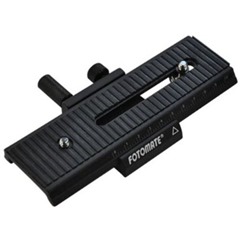
FocusingRailFotomate LP-01, Amazon product photo

The JYC Fotomate LP-01 Macro-Turning Long-Type Tripod Head is a single-axis macro focusing rail with 10 cm (4 inches) of travel, currently selling for $13.60 shipped from Hong Kong.

Friday, May 31, 2013

Manual Flash Exposure Chart Generator

When photographic flashes were commonly operated in manual mode, they usually had a chart or dial on the flash to calculate the correct exposure based on the distance to the subject. Now that many flashes are designed primarily for automatic use, they may omit this aid, making it harder to use the flash in manual mode.

I thought it would be helpful, therefore, to make a spreadsheet that would generate a table of aperture settings and subject distances for any manual flash. You can download it here:

Manual Flash Exposure Chart Generator [XLS]

Thursday, May 23, 2013

Fat Peppy (1997-2013)

20110401-K10D-10777.jpg

Pepper “Fat Peppy” Allen passed away today at the age of 16 from a blood clot in his femoral artery. He was my wife’s loyal companion and obstructer-of-laptop-use; she had him longer than she’s had me. He will be deeply missed.

Tuesday, May 21, 2013

Team Soft G

Apparently, at least on Twitter, today is the day for all parties to declare their allegiance on the matter of the pronunciation of “GIF,” the Graphics Interchange Format.

I stand with the soft G. (The “JIF” pronunciation, if you must.)

My reasons, like my wallet, are bifold:

  1. The creator of the format, Steve Wilhite, said that it is pronounced with a soft G, and this pronunciation was endorsed by his employer, CompuServe. The peanut-butter-like pronunciation was intentional. In my opinion, it is reasonable to grant inventors the privilege of naming their inventions, including their pronunciation*.  This privilege makes at least as much sense as patent protection.
  2. The usual hard-G argument is that “Graphics” is pronounced with a hard G, so GIF should be as well. This is a stupid argument, based on a non-existent, made-up rule that is not invoked for any other acronym. Anyone who advances this argument deserves to lose**.

* Within reason, at least.
** Anyone who pronounces “SCUBA” with a short U, “UNICEF” with a CH , “LASER” with a short A and soft S (not Z), and “NASCAR” with a schwa for the first A is exempt from argument #2.