Showing posts with label Pentax DA* 300mm f/4. Show all posts

Sunday, August 17, 2014

Canadian Rockies gear recap, volume 2

This is the second installment in a series evaluating the utility of photographic gear I took on vacation to Banff National Park and the surrounding area. In this installment, I’ll focus on the camera and lenses proper.

  • Pentax K-5 II: A. My APS-C DSLR performed admirably throughout the trip. It is relatively compact for its capabilities, and I love the 16 MP Sony sensor. It has a ton of dynamic range and is very forgiving in terms of exposure. The autofocus generally performed well on the trip.

As far as lenses go, I thought it would be instructive to figure out what percentage of my shots from the trip were taken with each lens. The table below lists the totals for each lens. The “keepers” are taken to be the images in my gallery from the trip.

Lens % of all exp. (n=1,079) % of keepers (n=63)
Sigma 10–20 mm f/4–5.6

20%

17%

Pentax DA 16–45 mm f/4

18%

27%

Pentax FA 50 mm f/1.4

0%

0%

Tamron 70–200 mm f/2.8 Di  Macro

31%

44%

Pentax FA 100 mm f/2.8 Macro

1%

0%

Pentax DA* 300 mm f/4

29%

11%


  • Sigma 10–20 mm f/4–5.6: A−. The Rocky Mountain landscape is made for ultrawides. If you’re going and don’t have one, at least consider renting one for the trip. This lens gets a slight grade reduction because it’s soft in the corners, with noticeable field curvature and astigmatism. Pricier options like the Sigma 10–20 mm f/3.5, Sigma 8–16 mm f/4.5–5.6, or Pentax 12–24 mm f/4 might yield better results, but I still consider my lens to be a great value.
  • Pentax DA 16–45 mm f/4: A−. This versatile lens saw a great deal of use on the trip, and in the overlap region with the 10–20 mm, I prefer the 16–45 mm. It also gets a light grade reduction because I think there’s something amiss with my copy, which I didn’t appreciate before the trip. The left and right edges are noticeably soft at all apertures, with the right side being worse than the left. I may send it in for servicing this winter.
  • Pentax FA 50 mm f/1.4: C. It’s a great lens, but I don’t think I ever mounted it on this trip. The zooms were more versatile, and I didn’t have any need for the fifty’s speed. At least it’s small and light.
  • Tamron 70–200 mm f/2.8 Di  Macro: A+. This was a last-minute purchase before the trip, and my gut feeling during the trip was that I could have lived without it. But looking at the images when I got home, I realized that was a totally wrong impression. This lens was a superstar, a wise purchase and great value. Tack-sharp and versatile, I used it to isolate the scenery and create intimate compositions. It was also a good choice for much of the wildlife that we encountered.
  • Pentax FA 100 mm f/2.8 Macro: D. I only used this lens to photograph a couple of moths to show my dad. I just didn’t shoot much macro on this trip, and the close-focus capabilities (and fine image quality) of the 70–200 mm would have sufficed. Though modestly sized, it’s a heavy lens, and just didn’t earn its spot on this trip.
  • Pentax DA* 300 mm f/4: B. An excellent lens, I expected to use it a great deal for wildlife and birds. But I shot few birds, and the 70–200 mm was generally a more versatile choice for wildlife.
  • Tamron 1.4x Pz-AF MC4 teleconverter: B−. I’m not sure if I used this at all; if I did, it wasn’t that much. But, it might make sense to leave the big 300 mm at home, and use the teleconverter with the 70–200 mm when necessary.

Saturday, June 9, 2012

Jersey Shore: Birds

I previously posted series on Snowy Egrets arguing over a mate and a Great Egret, but here’s the rest of the wingèd crew.

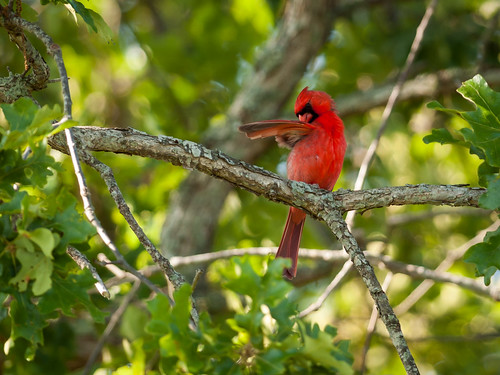
Preening Cardinal
Northern Cardinal, preening

Thursday, June 7, 2012

Jersey Shore: Figure Study

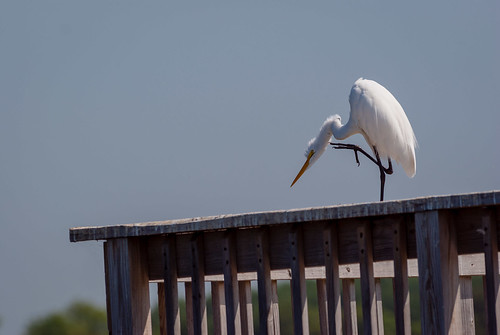
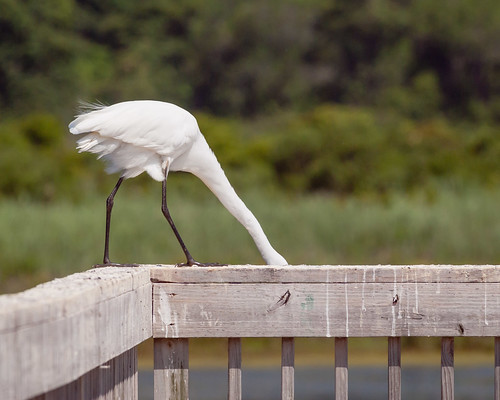
At Cape May Point State Park, a cooperative Great Egret posed for me on a pier. I think I may have interrupted his Tai Chi routines.

20120529-K10D-15485

20120529-K10D-15520

Tuesday, June 5, 2012

Jersey Shore: Egregious Behavior

This is the first of several posts showing photographs from our recent vacation to Wildwood and Cape May, New Jersey.

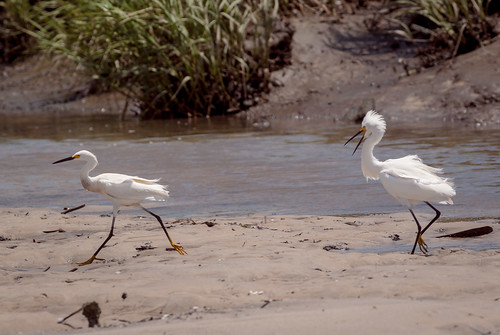
While looking for Red Knots at Cook’s Beach, on the bayshore north of Cape May, we observed the following scene involving a female Snowy Egret, a male who attempted to court her, and another male who objected to the first male’s advances. The dialogue is an interpretation by yours truly.

Egregious Behavior 1
"Hey, baby, I like the way you wiggle your toes when you fish. You come here often?"

Thursday, April 5, 2012

Opening Day | 28 | 2.8 | #44

Opening Day | 28 | 2.8 | #44

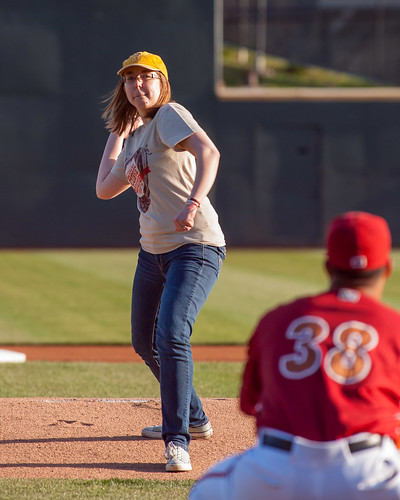
Today was the long-awaited Opening Day of the 2012 Altoona Curve season. Rare bird Katie Sekelsky designed the commemorative T-shirt for Opening Day, and was invited to throw out the ceremonial first pitch of the season. We were privileged to watch the game with her in one of Peoples Natural Gas Field's skyboxes.

20120405-K10D-14265
Bringing the heat

Thursday, September 30, 2010

Slide show: Wildwood/Cape May 2010

OK, my Flickr album for this year’s vacation is done.  Or at least as done as I feel like doing right now.  I recommend the “full screen” button in the slide show.

Wednesday, September 22, 2010

Wildwood: Two Mile Beach

Today the Spousal Unit and I went to Two Mile Beach, near the Coast Guard’s LORAN transmitter in Wildwood.  We followed the path over the dunes and walked to the jetty at the end of the beach.

Jetty_Walking_IMGP0451_cr

The bird activity was relatively quiet, with much less tern activity than last year.  Shorebirds included Sanderlings, Western Sandpipers, and Black-bellied Plovers.  At the jetty there was a single Ruddy Turnstone on the rocks:

Ruddy_Turnstone_IMGP0419_cr

On the way back, we watched a Turkey Vulture feed on the beach.

TV_Eating_IMGP0473_cr

TV_Flying_IMGP0475_cr

Tuesday, September 21, 2010

Cape May: Photowalk

Went out this morning for a CMBO-sponsored photowalk at Cape May Point State Park.  It was another beautiful, clear morning without a cloud in the sky.

Lighthouse_IMGP0305

The park continues to be overrun by Monarch butterflies on every flower:

Monarch_Above_IMGP0320

Monarchs_IMGP0307

We spend a while at a brush pile along the dunes, working on some Palm Warblers:

Palm_Warbler_IMGP0298

Not much else to note from the walk.  The Black-bellied Whistling Ducks were not present at the state park while we were out.  They may have moved to the Meadows.

I heard back from Louise Zemaitis regarding the tagged Monarch we reported on Sunday.  It was a local tag, from Cape May Point on September 7.  Based on the date, she said that there’s a possibility that it was a breeding Monarch, rather than one that will migrate to Mexico.  But who knows—maybe it will be recovered down there this winter.

Sunday, September 19, 2010

Cape May: Monarchpalooza, Black-bellied Whistling Ducks

Cape May is in the midst of an epic Monarch butterfly migration.  This morning at Cape May Point SP, they were on every flower, and in huge numbers overhead. 

Monarch_IMGP0191

(Click any photograph to embiggen.)

Among the half-million Monarchs in the area today, the Spousal Unit and I came across one with a tag from the Kansas University Monarch Watch program, tag number NMW 190.  We reported the tag recovery by email.

Tagged_Monarch_IMGP0204

Buckeye butterflies were also numerous:

Buckeye_IMGP0190

We also saw lots of American Lady butterflies:

Unknown_Butterfly_IMGP0200

We didn’t participate in any organized bird walks today.  There were a few nice raptors overhead (immature eagle sp., Osprey with fish, Peregrine Falcon, Coops & Sharpies).  The stars of the day, though, were the 4 Black-bellied Whistling Ducks in a pond near the hawk watch:

Whistling_Ducks_IMGP0141